What Is a Business Ecosystem And Why Every Founder Needs to Map Theirs
A business ecosystem is the complete set of connected elements that make your business work — every component, every touchpoint, every piece that combined makes the customer journey possible. Unlike a business model or a business framework, which describe something static and fixed, an ecosystem describes something living. Every element has a specific job. Everything connects to what comes before and after it. Remove one piece and the whole system feels the impact. Add something that doesn’t belong and the balance shifts. It’s inspired by how ecosystems work in nature, and it’s the most useful way I’ve found to help founders see their business as a whole — not as a collection of isolated tasks, but as a single connected system.
How a Business Ecosystem Is Different from a Business Model
You’ll have heard terms like business model, business architecture, business framework, and infrastructure. These are all useful, but they all describe a structure — something you build once and then operate within. A business ecosystem includes all of those things but adds a dimension that the others miss: connection and flow. In a natural ecosystem, a forest or a reef, nothing exists in isolation. Everything feeds into something else and the whole system is circular. One element supports the next, which supports the next, which eventually comes back around to the beginning.
Your business works the same way. Your content feeds into how people find you. How people find you feeds into how they enter your world. How they enter your world feeds into the relationship you build before they’re ready to buy. That relationship feeds into the moment they say yes. The experience of working with you feeds into the ongoing relationship afterwards. And that ongoing relationship feeds back into discovery — through referrals, word of mouth, and people returning for more. It’s not a funnel with a top and a bottom. It’s a cycle. And when you see it that way, you start to understand why some pieces of your business feel disconnected or why clients seem to disappear at certain points — because the ecosystem has a gap.
The Customer Journey Is How Someone Experiences Your Ecosystem from the Outside
The customer journey and the business ecosystem are two views of the same thing. The ecosystem is the structure — every component and how it connects. The customer journey is the path a person takes through that structure, from the moment they first find you to the ongoing relationship after the work is done. When you map one, you reveal the other. That’s why mapping the customer journey is the most practical way to uncover your ecosystem — you follow the path a client takes and at each stage you identify what piece of your business is doing the job.
There are six stages in the journey: discovery, welcome, relationship, the yes, the experience, and the onwards journey. At each stage, there’s a specific piece of your business that should be doing a specific job. When all six are in place and connected to each other, the system works. When one is missing or broken, you feel it — even if you can’t always name why.
What Happens When the Ecosystem Has a Gap
This is where it gets practical, because most founders don’t have a content problem or a marketing problem or a sales problem. They have an ecosystem problem — a gap between two stages that means people are falling through.
A founder who’s been posting consistently on LinkedIn for six months with excellent content might assume the content isn’t working because clients aren’t arriving. But the right people are finding it. They’re clicking through to her website. The problem is that when they get there, there’s nothing — no newsletter, no next step, no way into her world. The content is doing its job at the discovery stage. The gap is at the welcome stage. Another founder might have a beautiful website, a growing email list, and a well-crafted offer — but no clear mechanism for someone to say yes. The ecosystem is strong at every stage except the one that matters for conversion. These gaps are invisible when you’re looking at each piece in isolation. They only become clear when you see the whole system mapped out.
Why the Simplest Version of Your Ecosystem Is the Most Powerful
Most founders overcomplicate their ecosystems without realising it. They add platforms, offers, lead magnets, and content types because they see other founders using them, not because those pieces have a specific job to do in their system. The result is a bloated ecosystem where nothing connects properly and the founder is exhausted trying to maintain it all.
The most effective ecosystems are the simplest ones. One way for people to find you online, one way offline. One clear entry point into your world. One mechanism for building trust. One way for someone to say yes. One offer that solves your ideal client’s problem completely. And one way to keep the relationship alive after the work ends. Six stages, each with a clear piece doing a clear job. Everything else you add on top should make that core system stronger, not replace it. When you can see the simplest version of your ecosystem, you know exactly what your business needs to function — and everything else becomes a conscious choice rather than an anxious accumulation.
Map Your Own Ecosystem: a Free Workbook
I’ve created a free workbook that walks you through all six stages so you can map your own business ecosystem. It takes about twenty minutes, and by the end you’ll be able to see the complete structure of your business on a single page — what’s there, what’s missing, and where the gaps are. Download it below, and if you’d like to be guided through it step by step, listen to the companion podcast episode where I walk you through each stage.
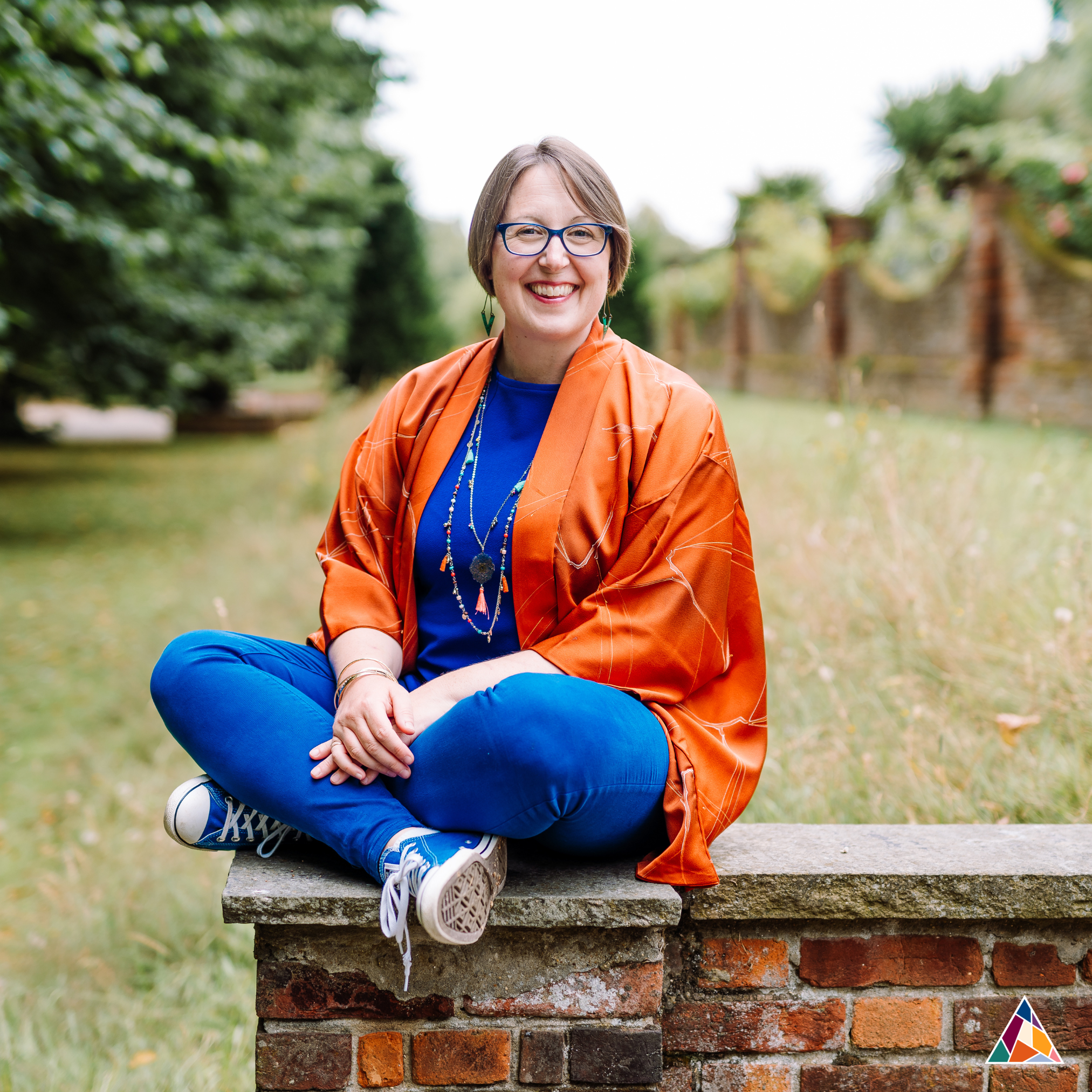
About the Author: Becky Benfield Humberstone partners with Quietly Disruptive founders to build businesses that change their corner of the world, on their terms. If you started your business because you believed things could be done differently, and you're ready to make that vision real, she gets it. Based in the UK and working globally via Zoom and in-person, she's done this work herself, more than once.

Ready to Take the Next Step?
If this resonated with you and you want to explore what building differently could look like, join The Founders Club, a weekly newsletter for Quietly Disruptive founders who are ready to do things their own way. Every week, expect insights, stories, and wisdom to help you build the business you actually want, not the one everyone says you should have.