The Philosophy Behind Quietly Disruptive®
Most business philosophies start with tactics. Here’s how to market. Here’s how to sell. Here’s how to scale. They treat entrepreneurship as a problem to be optimised and the founder as a variable to be adjusted until the numbers work.
Quietly Disruptive® starts somewhere else entirely. It starts with a question: what kind of life are you actually trying to build?
Because the philosophy behind Quietly Disruptive isn’t really about business. It’s about identity. It’s about the gap between who you are and how your business reflects that, and it’s about the quiet, stubborn refusal to keep building something that looks right but feels wrong.
Identity, not strategy
The fundamental premise of Quietly Disruptive® is that your business is an expression of who you are, not a separate entity that operates according to market logic while you happen to sit inside it.
This sounds obvious until you look at how most founders actually operate. They price based on what the market will bear, not on the life they’re trying to build. They take on clients because the revenue’s there, not because the work aligns with what they care about. They post content based on what performs, not on what they actually think. Over time, the gap between the founder and the business widens until they’re essentially running someone else’s company, one that just happens to have their name on it.
Quietly disruptive founders close that gap. They build businesses that reflect their values, their boundaries, their actual lives, not performatively (there’s no Instagram aesthetic of authenticity here), but structurally. The business itself is designed around who they are.
That’s what I mean when I talk about a business that works on paper but doesn’t fit. It isn’t always a bad business. Sometimes it’s a perfectly good business that just isn’t yours, built to someone else’s blueprint, measured against someone else’s definition of success, and the gap between what it delivers and what it costs you is the thing most founders never say out loud.

A worldview, not a framework
Quietly Disruptive® is not a framework. You can’t implement it like a system. There are no steps, no sequence, no do this then do that. The Twelve Codes exist to codify the principles, and the coaching exists to apply them to a specific founder’s specific situation, but the thing underneath both of those is something you either recognise or you don’t.
It’s a worldview. A lens. A set of beliefs about what matters and what doesn’t when you’re building a business and a life at the same time.
Those beliefs, stripped to their bones, are these:
That execution matters more than announcement. That boundaries are strength, not limitation. That your corner of the world is big enough. That you don’t need permission to build differently. And that the most powerful disruption is the kind no one sees coming.
Everything else, the Twelve Codes, the coaching, the podcast, the movement, flows from those five convictions. If they resonate, the rest follows naturally. If they don’t, this probably isn’t your philosophy. And that’s fine.
Your corner of the world
There’s a phrase I come back to constantly in this work, and it’s this: your corner of the world.
The entrepreneurship industry is obsessed with scale. Global reach. Massive impact. Changing the world. And for some founders, that’s genuine ambition. But for most of us, the honest answer is smaller and more powerful than that. We’re not trying to change the world. We’re trying to change our corner of it, our clients, our community, our industry, our family’s life, our own life.
And that’s not settling. That’s precision.
When I was sixteen, building Utterly Horses from my bedroom, I wasn’t trying to disrupt the global retail market. I was trying to build the best model horse business in the world. My corner. My rules. And within that corner, I was unstoppable, because I wasn’t spreading my energy across a grand vision. I was pouring it into something specific, something I understood deeply, something I cared about.
Quietly disruptive founders operate the same way. They don’t need to change everything. They need to change their thing. And when they do, the ripple effect takes care of the rest.
Boundaries as architecture
In most business advice, boundaries are an afterthought. Something you set once you’re successful enough to afford them. A luxury, not a foundation.
The Quietly Disruptive® philosophy inverts this completely. Boundaries aren’t something you add later. They’re the architecture your entire business is built on.
I work 10am to 4pm, Monday to Friday. That’s not a lifestyle choice I made after reaching some revenue threshold. It’s the structural constraint I designed my business around from the start. School pickup is at five. Morning walks are non-negotiable. Weekends are for my daughter and for rest. Everything I build has to work within those parameters, and because it has to, it does.
This is what I mean by proof not promises. I’m not telling founders they should set boundaries while quietly working twelve-hour days myself. I’m showing them what a boundaried business looks like in practice, with the revenue to prove it works.
When boundaries are the architecture, not the afterthought, they stop being limitations and start being competitive advantages. They force precision. They eliminate waste. They make you fiercely protective of the work that actually matters. And they prove, to your clients, to your industry, to yourself, that success and sacrifice don’t have to be synonyms.
Quiet confidence over loud hustle
Hustle culture didn’t fail because it was wrong about everything. It failed because it confused input with impact. More hours didn’t mean better work. More content didn’t mean deeper connection. More visibility didn’t mean more trust. It just meant more noise, and eventually the noise became indistinguishable from the signal.
Quiet confidence operates differently. It’s not the absence of ambition or effort. It’s the presence of something most loud founders lack: trust in the work itself.
Quietly disruptive founders trust that consistent, excellent work will compound. They trust that a small, engaged audience is worth more than a large, passive one. They trust that one deeply resonant piece of content is worth more than seven forgettable ones. They trust that if the work is good enough and the execution is consistent enough, the results will come without needing to manufacture urgency or perform confidence they don’t feel.
That trust is hard-won. It usually comes from having done the loud thing first and seeing what it cost. But once it’s there, it changes everything, because a founder who trusts their own work stops chasing and starts building, and the difference is visible in everything they do.
Proof not promises
If there’s a single phrase that captures the philosophy of Quietly Disruptive®, it’s this one. Proof not promises.
Most business coaching runs on promises. Follow this system and you’ll 10x your revenue. Join this programme and you’ll never feel stuck again. Implement this strategy and watch your business transform. The promise is always bigger than the delivery, and the gap between the two is filled with marketing.
Quietly Disruptive® doesn’t make promises. It shows proof. The proof is in the 10am to 4pm work window that generates six figures. The proof is in the boundaries held during two years of family court. The proof is in the twenty-five years of building unconventional businesses, starting from a bedroom at sixteen. The proof is in the founders who walk the path from where they are to where they actually want to be, and come out the other side with businesses that finally fit.
This philosophy isn’t theoretical. It’s tested. Every day, within a six-hour window, with a hard stop at four o’clock and a daughter to collect. That’s the proof. Everything else is just the story of how we got here.
A belief system you can build on
Quietly Disruptive® isn’t a business strategy. It’s a belief system, one that says you can build something remarkable without losing yourself in the process, that your constraints are features not bugs, that your corner of the world is worth changing, and that the quietest form of disruption, the kind that moves in silence and lets the results speak, is the most durable form there is.
If you want to see these beliefs codified into principles, read The Twelve Codes. If you want to understand the full definition and origin, start with What is Quietly Disruptive®? The Definitive Guide. And if you recognise yourself in any of this, in the gap between what your business looks like and how it actually feels, sign the pact and join a movement of founders who are choosing to build differently, on their own terms, without the hustle.
You don’t need to change the world. Just your corner of it. And you can start right now.
Onwards and Upwards,
Becky
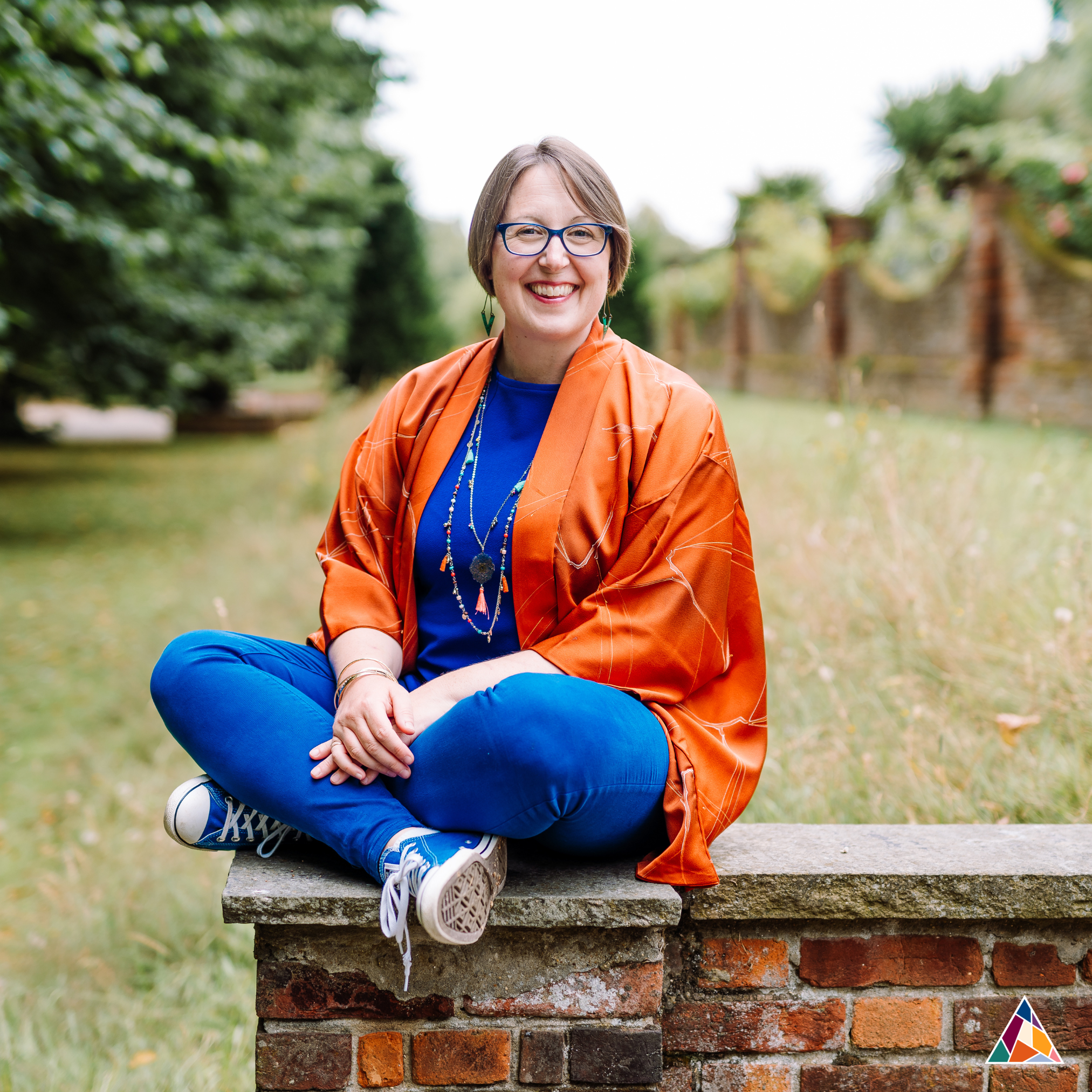
About the Author: Becky Benfield Humberstone partners with Quietly Disruptive founders to build businesses that change their corner of the world, on their terms. If you started your business because you believed things could be done differently, and you're ready to make that vision real, she gets it. Based in the UK and working globally via Zoom and in-person, she's done this work herself, more than once.

Ready to Take the Next Step?
If this resonated, Sign the Pact and join the Quietly Disruptive movement. Every week, Field Notes lands in your inbox with one honest idea, the real story of building differently, and the kind of clarity that comes from 25 years of doing things the unconventional way.