Quietly Disruptive®: A New Way to Build a Business
I’ve been self-employed for twenty-five years, and in that time I’ve built businesses that worked and businesses that didn’t, businesses I loved and businesses that nearly destroyed me, and I’ve made every mistake available to a founder and a few I had to invent along the way. I’ve also sat across from enough founders to know that most of them are navigating the same tension I was: the gap between what their business looks like from the outside and how it actually feels to be inside it every single day.
The business advice industry has one answer for that gap. Work harder. Scale faster. Be more visible. Optimise everything. Follow the system. And for some founders, at some stages, that advice works. But for a growing number of us, it doesn’t just fail to help, it’s the very thing that built the problem in the first place, because we followed advice designed for a different kind of founder and a different kind of ambition, and somewhere along the line we ended up building something we didn’t actually want.
Quietly Disruptive® is a different answer. Not a better one for everyone, but the right one for a specific kind of founder who’s been trying to force themselves into a model that was never designed for them.
The Business model we inherited
The dominant model of entrepreneurship was built by a specific kind of person and optimised for a specific kind of outcome. It assumes you want maximum growth. It assumes you’re willing to sacrifice personal time to get it. It assumes that visibility is the primary driver of opportunity, and it assumes that if the revenue is good, you should be happy, regardless of what it costs you to earn it.
This model works brilliantly if your values align with it. If you genuinely want to build a large team, if you thrive on public visibility, if the trade-off between time and money sits comfortably with you, the traditional model will serve you well, and there’s nothing wrong with choosing it.
But there’s a significant number of founders who followed this model because they thought it was the only option. They scaled because they thought they should. They took on clients because the revenue was there. They posted content because the algorithm rewarded it. And somewhere along the line, they looked up and realised they’d built something successful that they didn’t actually want, a business that delivers on paper and costs them everything that matters, and it’s far more common than anyone talks about, because from the outside it looks exactly like success.

What building quietly disruptive actually looks like
Let me describe what a Quietly Disruptive business looks like in practice, not in theory and not as an aspiration, but as a lived reality, because I’m building one right now and the specifics matter.
Boundaries are the foundation, not the ceiling. I work 10am to 4pm, Monday to Friday. Hard stop. School pickup is at five, morning walks are non-negotiable, weekends are for my daughter and for rest. My business is designed around these constraints, not despite them but because of them, and every decision I make about pricing, client load, content, and growth has to work within a six-hour window. Because it has to, it does.
Clients are chosen, not collected. I work with two or three founders at a time, never more, not because I can’t handle more but because the quality of the work demands it. Each founder gets bespoke coaching, no templates, no programmes, no one-size-fits-all system, which means saying no to founders who aren’t the right fit, even when the revenue would be welcome. The old model says never turn down money. The Quietly Disruptive model says the wrong client costs more than the revenue they bring.
Marketing leads with recognition, not pressure. I don’t use urgency tactics, countdown timers, or manufactured scarcity. My marketing says: here’s what I’ve observed, here’s what it might feel like, and if this is you, let’s talk. The goal is recognition, the reader seeing themselves in the words, not conversion through pressure. This is slower. It also attracts exactly the right founders and repels the wrong ones, which saves an enormous amount of time and energy in the long run.
Revenue is designed around life, not the other way around. My pricing isn’t based on what the market will bear or what my competitors charge. It’s based on what I need to earn within my constraints to build the life I want, and that’s a different calculation entirely, one that produces different and usually better results.
Growth is intentional, not default. I’m building multiple income streams, coaching, books, a print collection, a future lifestyle brand, but each one exists for a specific reason in a portfolio career I’m designing deliberately. Nothing is added because I should. Everything is added because it serves the whole.
How it’s structurally different
This isn’t just a vibes thing. The structural differences between a quietly disruptive business and a traditional one are concrete and measurable, and they show up in the decisions you make every single day.
In a traditional model, you price for the market. In a quietly disruptive model, you price for the life you’re building, which means your pricing is informed by your boundaries (how many hours you actually work), your capacity (how many clients you can serve really well), and your values (what kind of work you actually want to do). The number you land on might be higher or lower than market rate, but it’s the right number for you, and that matters more than it sounds.
In a traditional model, you grow your audience as broadly as possible. In a quietly disruptive model, you grow it as deeply as possible. A letter list of three hundred people who read every word and reply regularly is worth more than ten thousand followers who scroll past, because depth compounds in ways that breadth never quite manages to.
In a traditional model, success looks like scaling. In a quietly disruptive model, success looks like alignment. Revenue matters, obviously, this isn’t a philosophy of poverty, but revenue at the expense of alignment is just a different kind of failure. The goal isn’t more. The goal is right.
Who this way of building is for
You’ll know if this is for you because something in this article will have made you exhale. Not inspired you, inspiration is cheap, but made you exhale. That quiet relief of reading something that describes how you’ve wanted to build but didn’t think was allowed.
You’re probably ten to twenty years into your career. You’ve built something that works. You have clients, revenue, reputation. But the way you’re working, the pace, the client mix, the constant performance of visibility, doesn’t fit anymore. Maybe it never did.
You’re not looking for a system. You’ve tried systems. You’re looking for permission to build the way you’ve always known you should have been building, and the proof that it actually works. That proof is what I’m offering, not as a promise but as a lived reality: a business in a six-hour window, built on hard boundaries, run on intention, measured by alignment rather than scale. It’s not perfect. It’s not finished. But it’s real, and it’s mine, and it works.
Another way exists
I’m not here to tell anyone the traditional model is wrong. It works for the people it works for, and choosing it is a perfectly valid thing to do. What I am here to say is that it’s not the only option, and for the founders it doesn’t serve, there is another way.
Quietly disruptive is that other way. Not louder, not more aggressive, not more optimised. Just different. Built on different values, different structures, different measures of success, and increasingly, for a growing number of founders who’ve been forcing themselves into a model that never fit, it’s the way that finally makes sense.
Onwards and Upwards,
Becky
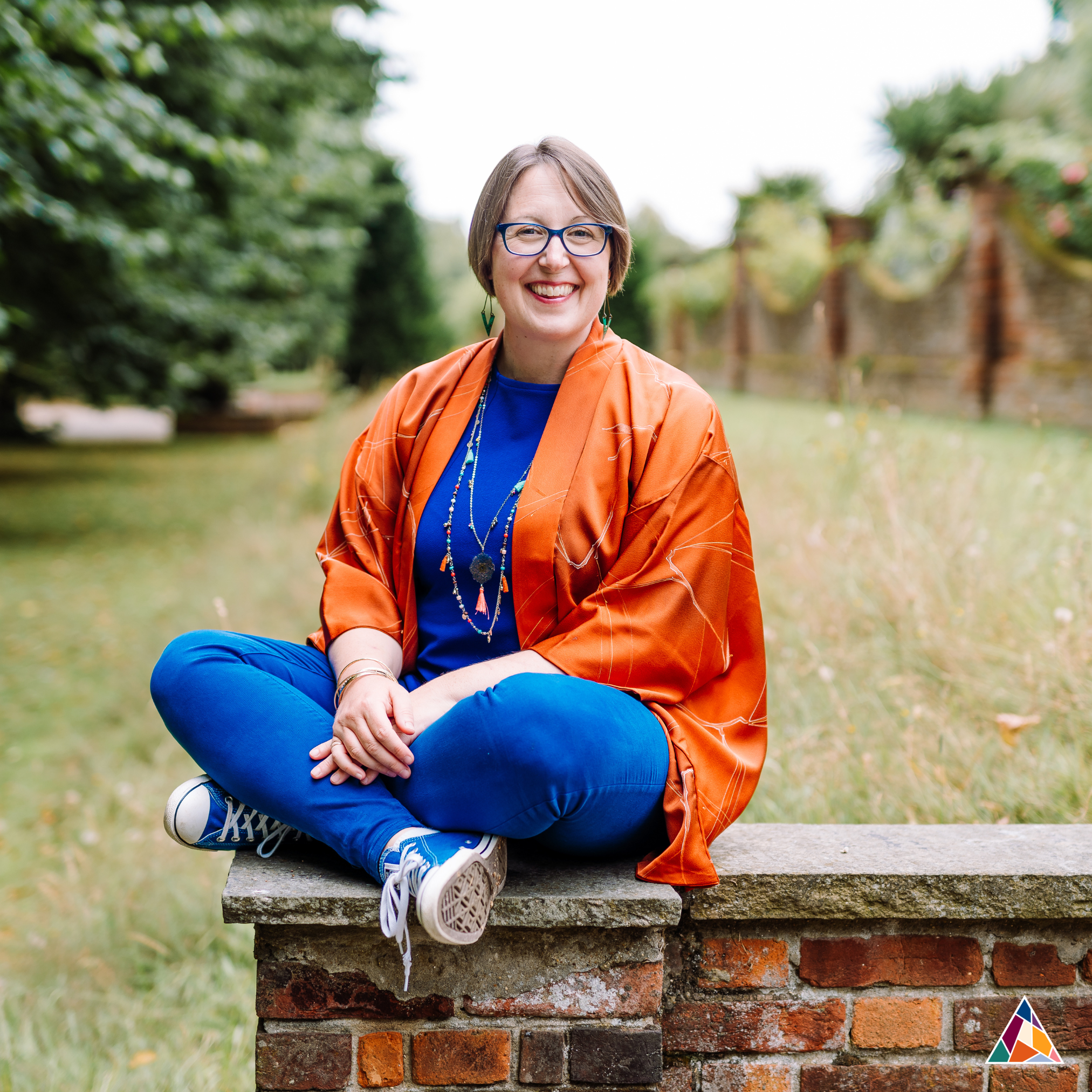
About the Author: Becky Benfield Humberstone partners with Quietly Disruptive founders to build businesses that change their corner of the world, on their terms. If you started your business because you believed things could be done differently, and you're ready to make that vision real, she gets it. Based in the UK and working globally via Zoom and in-person, she's done this work herself, more than once.
Ready to Take the Next Step?
If this resonated, Sign the Pact and join the Quietly Disruptive movement. Every week, Field Notes lands in your inbox with one honest idea, the real story of building differently, and the kind of clarity that comes from 25 years of doing things the unconventional way.