7 Signs You're in a Cage Business (And Why That's Not Your Fault)
Prefer to listen rather than read? Listen to the podcast episode covering this same topic here → The Quietly Disruptive Business Podcast
You know that feeling when something's off in your business, but you can't quite name it (or come to think of it, put your finger on it)?
Everything looks fine from the outside. Your business has good revenue, a roster of established clients, and every time your family gets together, they congratulate you on what you've built. On paper, you're doing everything right.
But on the inside it's different. There's this quiet voice whispering "something's wrong."
Maybe you've been ignoring it, telling yourself you're just tired or stressed or going through a phase. Maybe you've been waiting for it to get better on its own, but the problem is it hasn't.
What if that voice is trying to tell you something important? What if you're not broken but just trapped in what I call a cage business?
A business that's successful on the outside but suffocating on the inside. One you built yourself, with every yes you didn't mean, every boundary you hid, every client who drained you, every project you took that you didn't actually want.
I know this situation intimately because I built a cage business too. Today, I'm going to help you discover if you're in one right now.
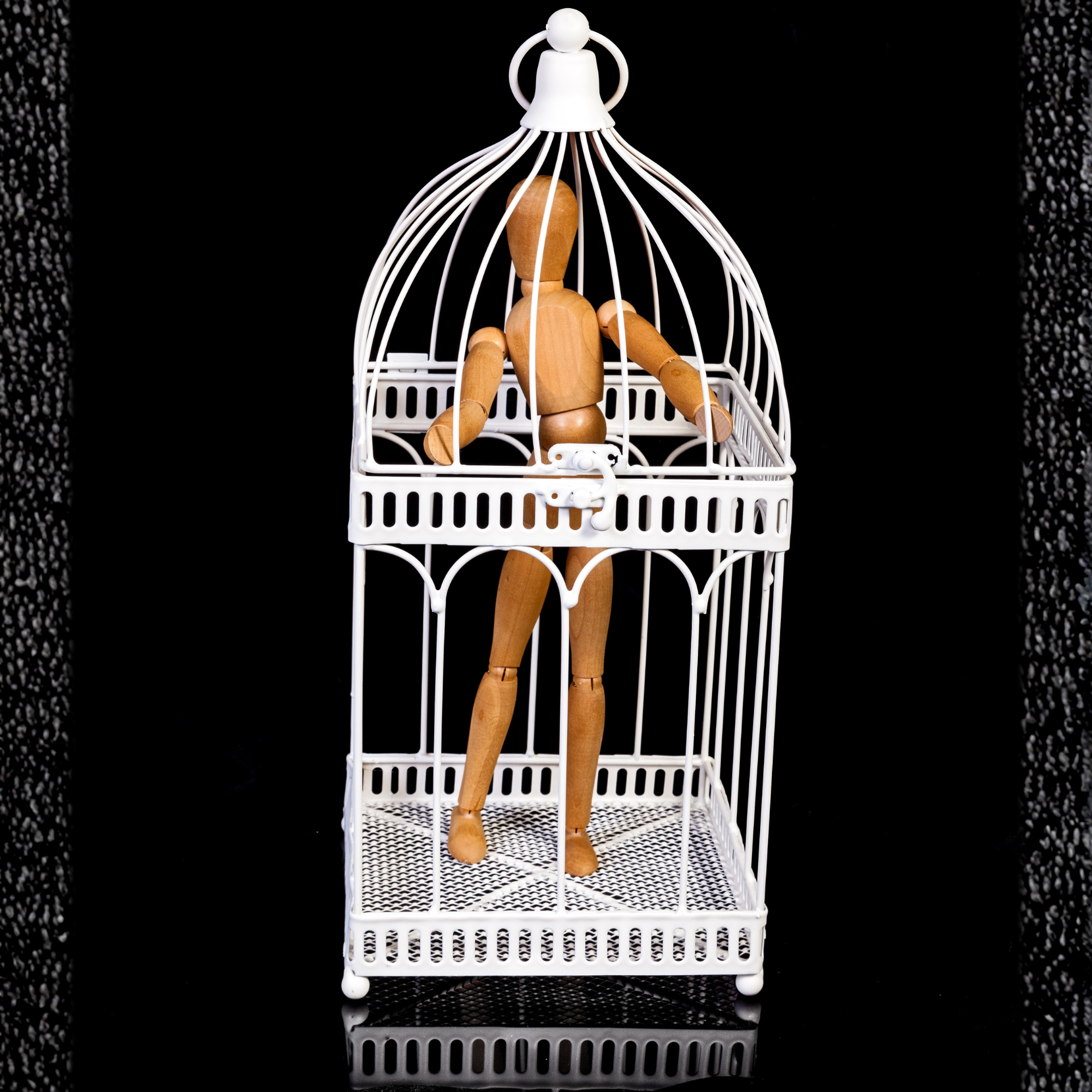
When you’re trapped in a cage business, it can feel suffocating on the inside but successful on the outside.
What Is a Cage Business?
A cage business isn't something you create intentionally. It's one of those things that creeps up on you over time, slowly and quietl, until one day you wake up and realise you're trapped behind bars that you built with your own hands.
I was 38 when I finally admitted it to myself. It's a few years ago now, and I'm on the other side, but I remember it vividly.
I was sitting at my desk, staring at an email from a client. One of those clients…you know the ones I mean. The type where you see their name in your inbox and your stomach drops before you've even read the first line. You already know they're going to be asking for something more. More than the project outlined, more tasks than you can really stretch to, more things they'll want that you'll add to your to-do list.
I'd taken the project because I needed the money. I was in the middle of family court proceedings and the solicitor bills were mounting. I was desperate. So I said yes to work I didn't want, with clients I didn't see eye to eye with, because I didn't think I had a choice. Or at least, that's what I told myself at the time.
The Outside vs. The Inside
From the outside, I looked successful. I was busy (very very bus) with my days chocked full of work, money coming in, and a professional reputation as a very safe and reliable pair of hands. People were congratulating me on the business I'd built. "Aren't you doing well," everyone said.
That was the outside.
On the inside, I was exhausted and deeply resentful. I was trapped in something I'd created myself.
I called it my cage business, because that's exactly what it felt like. A beautiful cage that I'd built myself, bar by bar, yes by yes, compromise by compromise. The door on that cage was clamped shut with a padlock constructed of fears and beliefs.
You're Not Doing It Wrong
I'm sharing my story not because I think my experience is special. I'm sharing it because I've learned that if you're feeling this way, it's not your fault. There's a reason.
My cage business was constructed through decisions, small decisions that don't seem to make an impact until you add all those small decisions up.
I said yes because I needed the money. I took clients who drained me because I couldn't afford to be selective. I hid my boundaries because I thought that's what being professional meant. I worked myself to exhaustion because everyone said that's what it takes to succeed.
I wasn't doing it wrong. Each of these things had logic and reasoning behind them, but when combined, they were decisions that signaled I was surviving.
I'd built my business using everyone else's definition of success instead of my own. Things that I thought I should be doing, not things that were right for me at that point in time.
The Root Problem
What took me years to understand is that I built that cage because I was trying to be someone I wasn't. I'm naturally a quietly disruptive person. I have things I want to do, impact I want to make. I want to build with intention, not perform for attention. I want to work my way, not follow everyone else's blueprint or way of doing things.
Now fully free of the cage, I can look back and see that I spent years suppressing that. I was trying to look like what I thought a successful business owner should look like, especially when I was just trying to survive. I followed the rules. I was always available. I always said yes. And every time I did that, I added another bar to the cage.
What a cage does is limit your ability to do the things you want, whether that's the impact you want to create or the things you want to achieve. You become so wrapped up in providing for everyone else that you overlook yourself and put your own hopes and dreams onto the back burner, repeatedly. You become someone you're not, conforming instead of being quietly confident. The cage keeps you small, confined, and in a box.
It's not always about bad clients or too much work. When you get to the root problem of a cage business, it's about the gap between who you actually are and what you're trying to be.
The 7 Signs You're in a Cage Business
So let's walk through seven signs that you might be in a cage business. I'm going to use my own stories as examples, not because I think you need to hear about me, but because I want you to know you're not alone in this. I've been exactly where you are. I know what it looks like from the inside.
You might recognise one sign. You might recognise several. And that's okay. This isn't about adding another thing to your list of problems. It's about raising awareness and recognition.
Because you can't change what you can't see. And right now, if you're in a cage, there's a good chance you've been telling yourself everything's fine when it really isn't.
You're Saying Yes to Work You Don't Actually Want
It's the classic: just because you can do something doesn't mean you have to do it.
I used to take on website design projects, not because I loved building websites or because it was my zone of genius, but because I could do it and clients would pay for it.
I built so many websites that I became a Squarespace Silver Member, and it wasn't officially a service I offered. 😆 I said yes, over and over, building websites I didn't really want to build, doing work that drained me instead of energised me. What I couldn't see is that every time I took on work I could do but didn't really want to do, I had less space for the work I actually wanted to be doing.
Maybe you're doing this too. Saying yes to projects outside your sweet spot because you're capable of doing them. Taking on work that pays the bills but kills your soul a little bit. Building a business full of things you can do instead of things you actually want to do.
Just because you can do something doesn't mean you have to do it. Every yes to work you don't want is a no to work you do.
You're Working With People Whose Values Don't Match Yours
In other words, you can't build a sustainable business with people you're constantly at odds with.
I had a social media client once who wanted to build a brand that called out their competitors in public, aggressively and in a make-them-look-bad kind of way.
I hated the idea. It went against everything I believed about how to build a business and how to do marketing with integrity. I believed it was unethical, not to mention immoral, but they were paying me, so I did it anyway.
The friction was constant. Every meeting, content plan, and post was exhausting as I was trying to do work I fundamentally disagreed with.
The Dread Factor
Maybe you know this feeling. It could be the client whose approach makes you uncomfortable or the project that requires you to compromise your values. Another example is when you're constantly biting your tongue because what the client wants goes against what you believe.
Or it can be simpler than that too. It's the client whose name pops up in your inbox and your stomach drops before you've even read the email. You don't even need to know why anymore. You just know you dread working with them.
When your values don't align with your clients', friction happens. And friction over time becomes resentment. Friction and resentment build bars on cages.
You're Hiding Your Boundaries (And Then Breaking Them)
This one still makes my heart sink when I think about it.
Back in my cage business, I had to finish work by 4pm because school pickup was just after four. I lived an hour away from most of my clients, so when a client would ask for a 3pm meeting at their office, I should have said no. Or at least said, "I can do 10am or 11am, but afternoons don't work for me."
But I didn't. I said yes to those 3pm meetings and then hoped desperately that the meeting would end early so I could make it to school on time.
Most of the time those meetings didn't end early. I'd be racing down the roads, stressed out of my mind, knowing I was going to be late again. Either that or I was calling someone else to do pickup and feeling guilty about it.
I wasn't just hiding my boundary. I was breaking it. And it was one that clients didn't even know existed.
The Secret Boundary Problem
Maybe you're doing this too. You have boundaries (you know what they are) but you don't tell anyone about them. And then you break them when clients ask for things that cross the line.
What I know now is that you can't keep a boundary that's a secret, and you can't expect clients to respect something they don't know exists.
Your boundaries aren't the problem. Hiding them, and then breaking them, is.
Your Business Is Consuming Your Life
Business and life are intertwined when you're a founder. That's completely normal. Work-life balance is a myth, but there's a difference between your business being part of your life and your business being all of your life.
One is integration. The other is consumption.
I remember checking emails during my daughter's bedtime story when she was younger. I was actually holding my phone while she was falling asleep because I was waiting for a client response that "couldn't wait" until morning. Except the reality was it could have. It wasn't an emergency. I'd just made myself available all the time.
My daughter was three at the time. She'll never remember that moment, but I remember it constantly because it wasn't the only time. It was just one of many situations.
When Work Becomes Everything
Work bled into everything: evenings, weekends, holidays. I'd be on a beach with my laptop, doing "just this one thing."
My business wasn't part of my life anymore. It was my life. And everything else—my family, my health, my actual existence as a human being—was squeezed into whatever scraps were left over.
Maybe this sounds familiar. Maybe you're answering emails at 9pm. Working on "just this one thing" Sunday morning. Your phone is always within reach, just in case.
It's so easy to justify this one, to tell yourself it's temporary and all part of running a business. You'll just work all the hours until this project's done or things calm down. What I found is that I used this logic for years and things never calmed down. They just got worse.
What I know now is that a business that consumes your life doesn't suddenly get less hungry or stop when it's full. It just keeps eating. When your business is consuming your life, something needs to change.
Success Feels Hollow (Or Worse…It Feels Like a Lie)
Back when I was in my cage business, I remember hitting a revenue milestone I'd been working toward for months. There was so much work, so many late nights, grafting, hustling, and then my tax bill arrived.
I looked at the breakdown and what was actually left after everything, and it was that sinking, disappointing feeling of: "This is what I worked that hard for?"
All that sacrifice, exhaustion, and boundaries broken. All those nos I hadn't said. The celebration of hitting that revenue goal lasted about five minutes, and then it was just... hollow. Empty. Like I'd climbed a mountain only to discover the view wasn't worth it.
When Achievements Feel Empty
Maybe you've had a similar feeling. You hit the revenue goal and then realise what's left after tax barely covers your living expenses. You land the impressive client and the excitement dies the moment you actually start the work. You achieve the thing you said you wanted and it doesn't feel like winning. It feels like surviving.
I'm not saying that revenue goals or achievements aren't important. They are—when the inside and outside match. When you achieve that turnover you want but without burning yourself to a crisp in the process. Success on the inside and outside is totally different to success on the outside and emptiness on the inside, wondering whether it was all worth it.
You Can't Remember Why You Started
This one's sneaky. It's like setting off to a destination and then completely forgetting where you were going.
We all start our businesses for a reason, or reasons. Maybe it was freedom, flexibility, or financial security. Maybe it was building something meaningful, or being your own boss, or doing work that actually mattered.
There was a vision. A dream. Something that made you think, "Yes, this is what I want to create."
When's the last time you felt connected to that?
Lost at Sea
I couldn't remember mine for the longest time, especially when I was deep in my cage business. The original vision got buried under client demands and revenue pressure and just trying to survive month to month.
It felt like I was in a boat. I plotted my destination when I started my business and set off on the ocean, rowing toward it. But somewhere along the way, when the waves got bigger and the thunder roared overhead, I lost sight of where I was going. Instead, I was just rowing around and around in circles, trying to keep my head above water, unable to see land, a way back, or a way forward.
When your business looks nothing like the business you wanted to build and you're not even sure how that happened, that's a sign of a cage business. It's morphed into this Frankenstein thing, and you don't recognise it.
And recognising is a theme that runs like a thread through cage businesses. It's a key sign and symptom of them.
You're Performing a Version of Yourself You Don't Recognise
This one comes with a confession. I was a chameleon when I was in my cage business.Whatever the client wanted me to be, I became. Not just in style or approach, but in values, in beliefs, and in what I was willing to compromise.
If a client wanted aggressive marketing that called out competitors by name, I did it, even though it went against everything I believed about building a brand with integrity.
If another client wanted to underprice their services to "stay competitive," I helped them race to the bottom, even though I knew they were undervaluing their expertise.
If a client made a comment in a meeting—political, ethical, whatever—that I fundamentally disagreed with, I'd nod, smile, and stay neutral. Never standing up for what I believed in.
The Cost of Being a Chameleon
I was performing so constantly that I couldn't remember who I actually was underneath it all. I couldn't remember what I actually believed or what I actually stood for or where my own line was.
Maybe you're doing this too. Shifting your position depending on who's in the room. Compromising on things you said you'd never compromise on. Going along with approaches that make you uncomfortable because you're afraid of losing the client.
The worst part of being a chameleon is that you're building a business that only works if you keep performing. The moment you stop being the chameleon and start showing who you actually are, the whole thing starts to crack.
It cracks and falls apart because you haven't built a business for you. You've built a business for whoever might pay you and whoever you can adapt to.
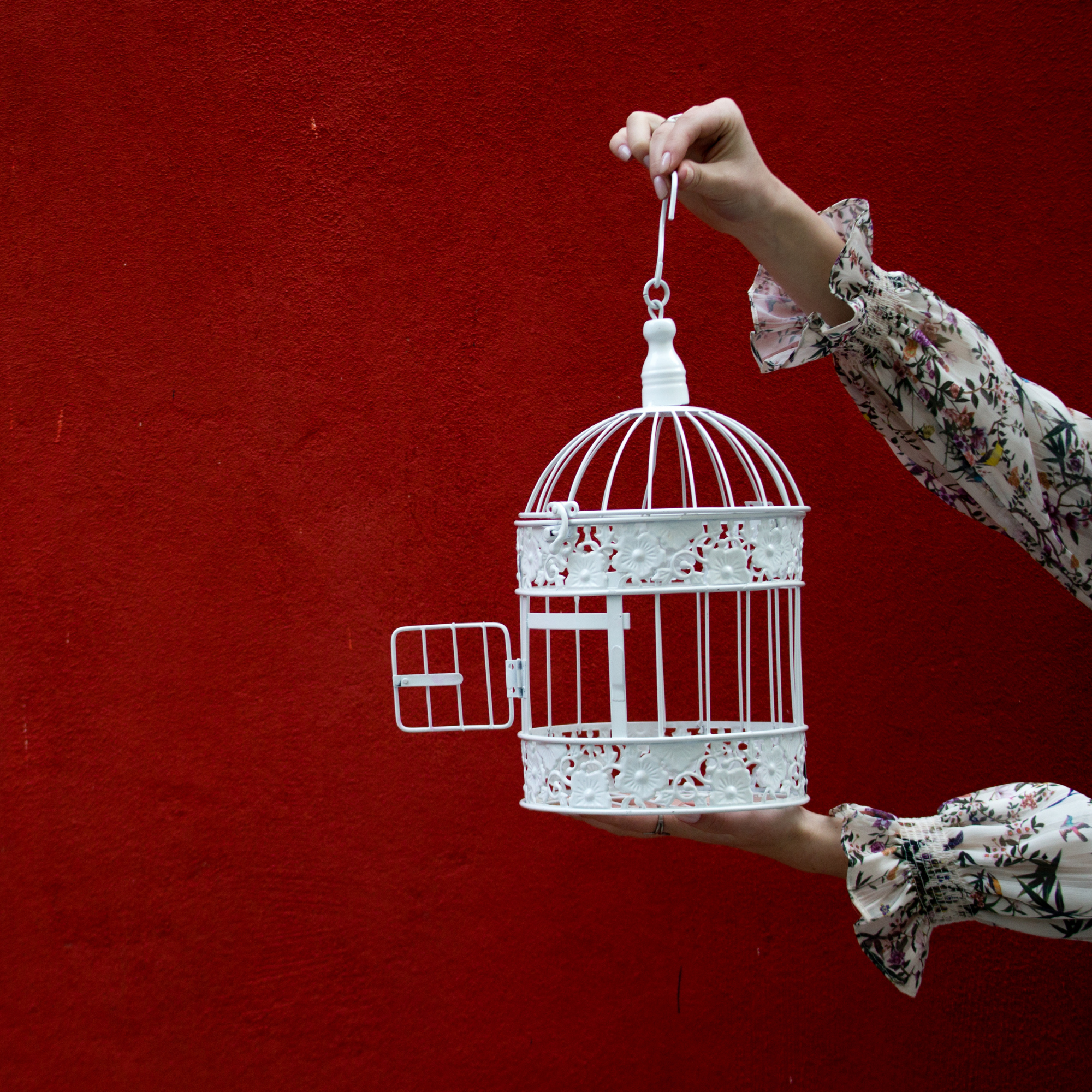
You have the ability to break free from the cage
How Many Did You Recognise?
So those are the seven signs of being in a cage business, or at least on the road to building one. How many did you recognise?
I'm not asking so I can point out how stuck you are. I'm asking because you genuinely can't change what you can't see.
If you recognised one or two signs, you're catching it early, which is good news. The walls of that cage are being built, but the door's still open.
If you recognised three or four, you're deeper in than you probably thought, but you're aware now, and awareness changes everything.
And if you recognised five or more? You're in a cage business fully, and you've probably been here for a while without quite realising it.
It's Not Your Fault
What I want to share with you, if the recognition has hit that you're in a cage or slowly building one, is that it's not your fault.
You didn't fail. You didn't do it wrong. You built exactly what you thought you were supposed to build.
You said yes to clients who drained you because you needed the money, and nobody taught you it was okay to be selective. You hid your boundaries because every business book and LinkedIn post told you to "hustle harder" and "be available" and "go the extra mile." You built a business that consumed your life because that's what success looks like in every piece of content you see: busy, impressive, always on, and all-consuming.
You're not broken. You're not doing it wrong. You're just in a cage, created by decisions you thought you should be making.
What I know from living this myself and being on the other side is that cages can be opened. But to do so, first you must see it, name it, and stop pretending it's fine when it's not.
What to Do Right Now
If you've listened to these signs and recognise one or more, I'd like you to sit with this. Don't try to fix them yet or make a plan. And please don't beat yourself up about recognising yourself in these patterns.
Just see them. Name what's happening. Write whatever it is down if that helps. Acknowledge where you are right now.
Because you can't get out of a cage you won't admit you're in.
You're Not Alone
If you're reading this and realising "this is me"—first, please breathe. You're not alone.
I've been exactly where you are. I know what it's like to be congratulated on a cage while you're suffocating inside. I know what it feels like to look successful on the outside while falling apart on the inside.
I want you to know: I see you. I understand what it's like to carry the weight of all those "shoulds" and to wonder if you're doing it wrong because you're not doing it like everyone else.
This is why I'm sharing all of this with you. Cages have doors, and once you see the cage, you can start figuring your way out—either on your own or with help.
I escaped my cage. I was trapped in every single one of these seven signs, and I found my way to freedom, not by burning everything down, but by rebuilding on my own terms.
If I can do it, you can too. I know the way because I've walked it.
Your Path Out
The route out of a cage is different for everyone. That's why when I work with quietly disruptive founders, we figure out your specific path- what's keeping you stuck, what you actually want, and how to rebuild on your terms. It's never the same answer because your cage isn't the same as mine was.
But it all starts with awareness. Just knowing you're in a cage, or on the road to building one, that's the first step.
You can't get out of something you won't admit you're in.
So please, don't give up. Keep trusting that quiet voice that's telling you something's wrong, that even though things look good on the outside, they're not good on the inside. That voice isn't trying to make you feel bad. It's trying to guide you home to who you actually are and to the road where you can make the impact that you know, deep down, you're meant to create.
There is a way out. You don't have to stay in your gilded cage or be someone you're not. I see you, and I believe you can create the business to help you achieve the impact you want and deserve.
Onwards and Upwards
- Becky :)


About the Author: Becky Benfield Humberstone helps Quietly Disruptive founders escape the cage businesses keeping them from their real purpose. If you're so busy surviving that you can't remember why you started, or the impact you actually wanted to create, she gets it. Using The Two Questions Framework, Becky works with established entrepreneurs to move from trapped and silent, to free and making the impact they know, deep down, they're meant to create. Based in the UK and working globally via Zoom, she's walked this path herself.
Ready to Take the Next Step?
If these signs resonated with you and you want to explore what breaking free could look like, join The Founders Club, my weekly newsletter for Quietly Disruptive founders who are done with cage businesses and ready to build differently. Every week, I share insights, stories, and permission to build the business you actually want, not the one everyone says you should have.